AVS701: Faster, Error-Free Installation
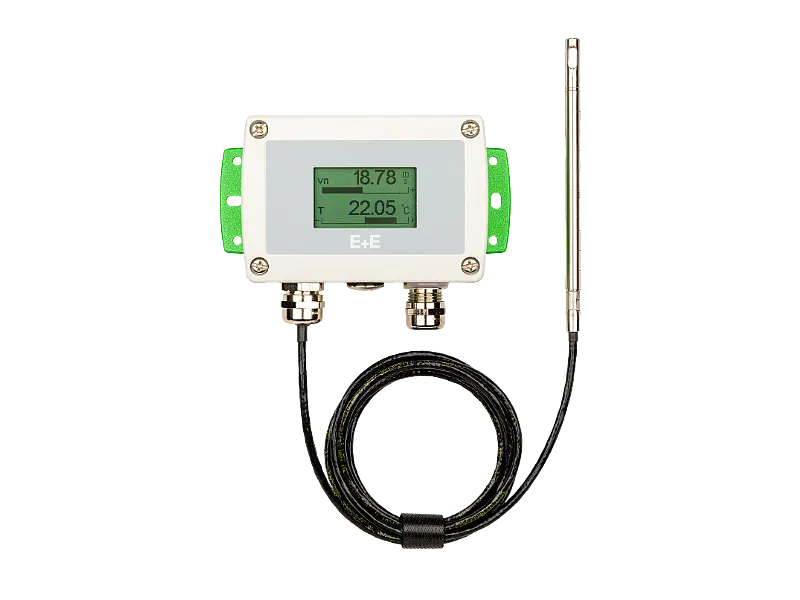
When measuring industrial flow, correctly installing and reliably commissioning a sensor is just as important as accuracy. Rushed installations can cause problems that lead to time consuming trouble shooting, additional tests, and avoidable delays.
This is exactly where the AVS701 comes in.
The air and gas velocity sensor from E+E Elektronik was developed for demanding industrial applications and combines high measurement performance with significantly easier installation. A key feature is the precise positioning of the remote probe aided by a specially developed alignment crimp and the included alignment tool. The sensor can be installed in the optimum position relative to the flow direction. This reduces installation errors, minimizes corrections, and creates the basis for accurate measurement results right from the start. As a result, installation can be up to 60% faster.
Why commissioning takes time
A measurement problem is rarely immediately clear straight. If a measured value deviates, this often triggers a chain of checks, queries, and verifications, such as:
- Check components
- Review control parameters
- Contact technical support
- Compare against handheld instruments
- Check wiring and scaling
- Remove the sensor and send it in for inspection
Each step costs signficant time, which delays commissioning.
Troubleshooting becomes easier Practical comparison: significantly less effort in troubleshooting
Take a typical scenario from a plant operation: measurement deviations are discovered during commissioning and troubleshooting. This is the result of a flow sensor having been misaligned during a rushed installation. This must now be corrected, costing time and resources.
Had the AVS701 been installed, these issues would have been avoided. The sensor is designed to make troubleshooting easier during installation and results in commissioning finishing in a much shorter time overall.
Faster installation thanks to precise sensor positioning
A key factor in saving time lies in the installation itself. Precise alignment of the remote probe with the flow direction helps avoid typical installation errors from the outset.
The AVS701 installs faster and more precisely with a special tool included with the device that ensures correct positioning. This reduces unnecessary corrections, speeds up commissioning and noticeably increases efficiency throughout the project workflow.
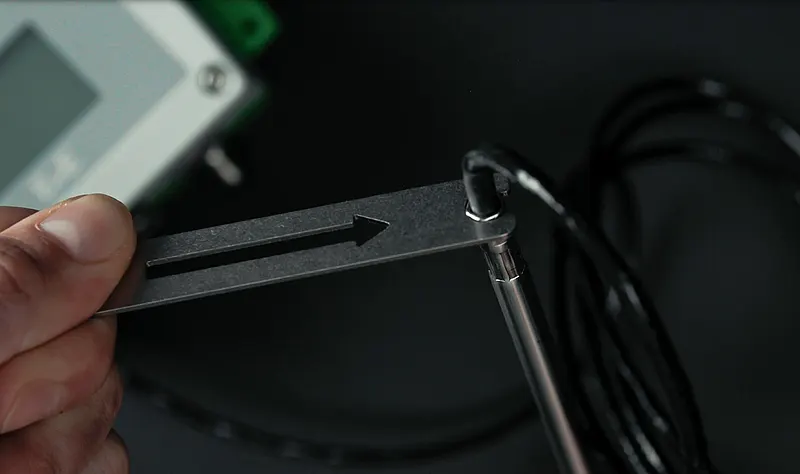
This is a decisive advantage, especially in applications with tight schedules: if the sensor is positioned correctly from the beginning, the risk of deviations, queries and downstream checks is significantly reduced.
What makes the difference
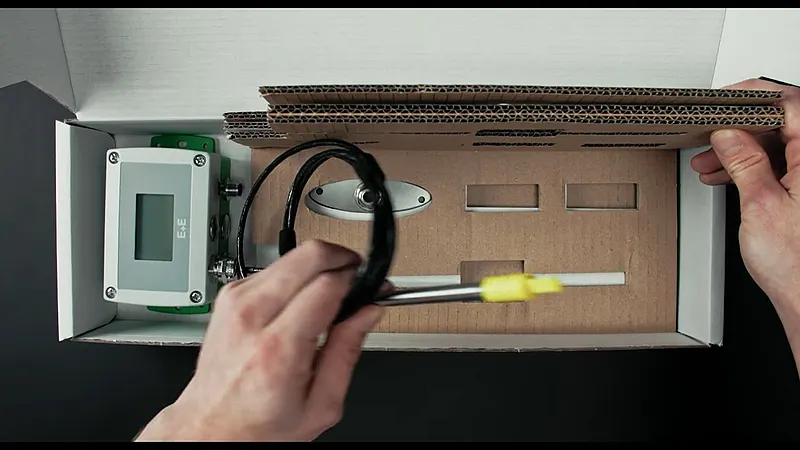
Time savings are not created by sensor performace alone, but also by the installation and commissioning efforts. Tools such as the Quick Guide and the alignment aid help to prevent installation errors and reducing the need for troubleshooting later on.
For the use of this service, prior consent to the processing of your data and in particular to the setting of cookies is necessary. You can consent to the processing and setting of cookies here. Without your consent, your data will not be processed in connection with this service and no cookies will be set. You can revoke your consent at any time. For more information on cookies and the processing of your data in connection with this content and a way to revoke your consent, please see our privacy policy.
Conclusion: less downtime leads to faster productivity
The AVS701 not only supports precise measurement of air and gas velocity, but also noticeably reduces the effort involved in installation errors, troubleshooting and commissioning. Precise sensor positioning with the alignment tool helps prevent errors during installation and accelerates commissioning. This saves time, lowers process costs and brings systems into stable operation more quickly.
Throughout the entire product development process, from the selection of materials to manufacturing and final inspection, E+E Elektronik places the highest priority on precision and accuracy. Optimum sensor positioning is the consistent continuation of these factory standards on the customer side as well.