Environmental Monitoring in Pharma: How to Choose the Right Sensor Technology for Pharma Machinery
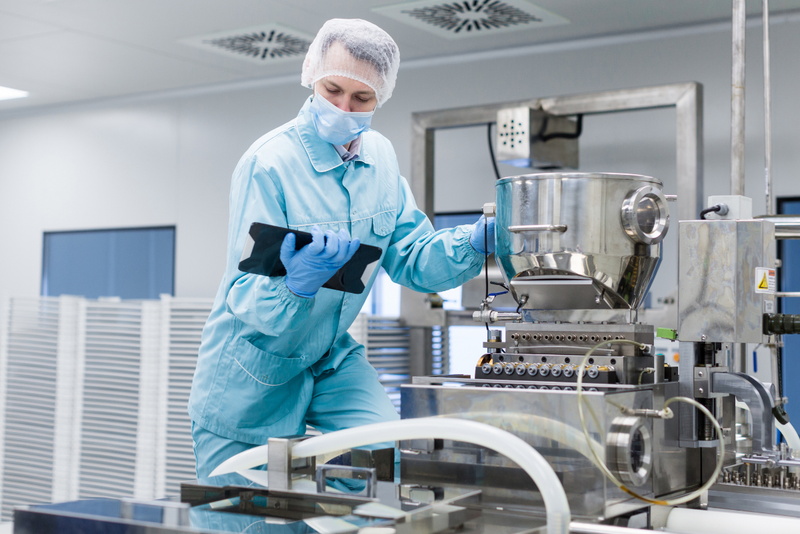
Sensors for Cleanrooms, Isolators, Drying, and Packaging
For reliable environmental monitoring in the pharmaceutical industry, highly accurate sensors are essential. Pharmaceutical production is subject to the strictest requirements for cleanliness and process safety. Even the smallest deviations in temperature or humidity can jeopardise product quality or lead to regulatory non-compliance.
In this article, we show what matters when selecting and integrating sensor solutions:
- Key requirements for sensors in pharmaceutical machinery engineering
- Challenges and the most important measurands in laminar flow hoods, isolators, drying and packaging
- Practical sensor recommendations from E+E Elektronik
High Monitoring Demands in Pharmaceutical Machinery Engineering
In pharmaceutical production, strict regulations such as GMP, ISO 14644 and EU Annex 1 apply. These standards require continuous monitoring and complete documentation of critical environmental parameters, especially in aseptic zones.
Environmental monitoring in pharma (often also referred to as condition monitoring) describes the monitoring of physical ambient conditions such as temperature, humidity, differential pressure or air velocity in pharmaceutical manufacturing. This helps identify maintenance needs and process risks at an early stage. Unlike central building monitoring (BMS/building management), the focus here is on machine-level sensors installed directly in pharmaceutical equipment and machinery.
However, requirements vary depending on the machine type. While laminar flow systems primarily focus on air velocity, drying systems involve high temperatures and humidity levels.
What Are the Key Requirements for Environmental Monitoring in Pharma?
Selecting the right sensor technology is crucial and depends on which equipment type, process environment, measurands, housing concepts, and calibration strategies are required.
Sensors used in pharmaceutical machinery engineering must remain reliable over the long term under demanding conditions:
- Reliability: Continuous operation, even during cleaning cycles with alcohol or H₂O₂.
- Accuracy: Precise readings to support regulatory compliance (GMP, FDA, ISO 14644).
- Compact design: Space-saving integration in confined machine areas.
- Long-term stability & easy calibration: Continuous condition monitoring with minimal maintenance.
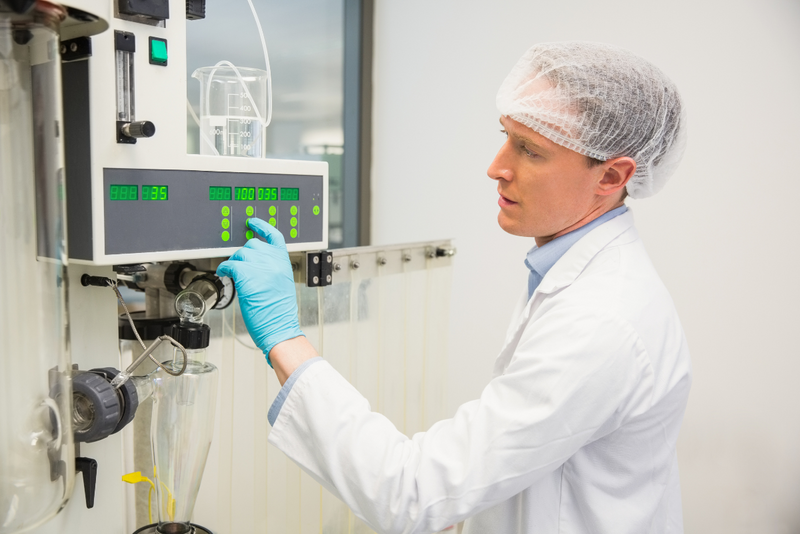
Laminar Flow Hoods & Cleanroom Modules: Airflow and Temperature in Focus
In laminar flow hoods, cleanroom workstations or fan filter units (FFUs), uniform airflows protect the quality of pharmaceutical products. A controlled laminar airflow without turbulence or backflow is only possible with precise environmental monitoring in the working area.
Critical measurands:
- Air velocity: < 0.5 m/s – for stable laminar flow
- Differential pressure: < 100 Pa – to ensure pressure cascades and airflow direction
Typical sensor challenges:
- proof of stable cleanroom conditions in line with EU Annex 1
- high resolution at very low air velocities
- compact designs for tight equipment installations
- calibration without removing the entire device for continuous condition monitoring
Isolators and RABS: Protection Through Controlled Pressure Conditions
In aseptic systems such as isolators and RABS, constant ambient conditions are essential. Even the smallest deviations in differential pressure, temperature or humidity can lead to contamination.
Critical measurands:
- Differential pressure: fast response at < 100 Pa
- Temperature & humidity: stable operation in sterile environments
- Air velocity: for laminar flow inside the enclosure
Typical sensor challenges:
- continuous monitoring during sterilisation and operation
- high resistance to H₂O₂ and alcohol-based cleaning agents
- very fast t90 response times for immediate reaction
- calibration without opening the system
- fulfilment of GMP and Annex 1 requirements
Pharmaceutical Drying Technology: Stable Processes, Reproducible Quality
Whether fluidised bed, spray or tray dryers, drying processes in the pharmaceutical industry demand maximum precision. The goal is uniform residual moisture with minimal energy input. Environmental monitoring directly in the process provides the necessary real-time data.
Typical applications:
- fluidised bed dryers
- air-handling systems
- explosion-hazard areas
Critical measurands:
- Humidity / dew point: to control residual moisture
- Temperature: often up to 180 °C
- Differential pressure & airflow: for stable drying conditions
Sensor challenges:
- dust exposure and aggressive media
- dew point measurement at low humidity
- ATEX conformity for explosion-hazard areas
- traceable calibration with minimal downtime
- energy efficiency through precise control
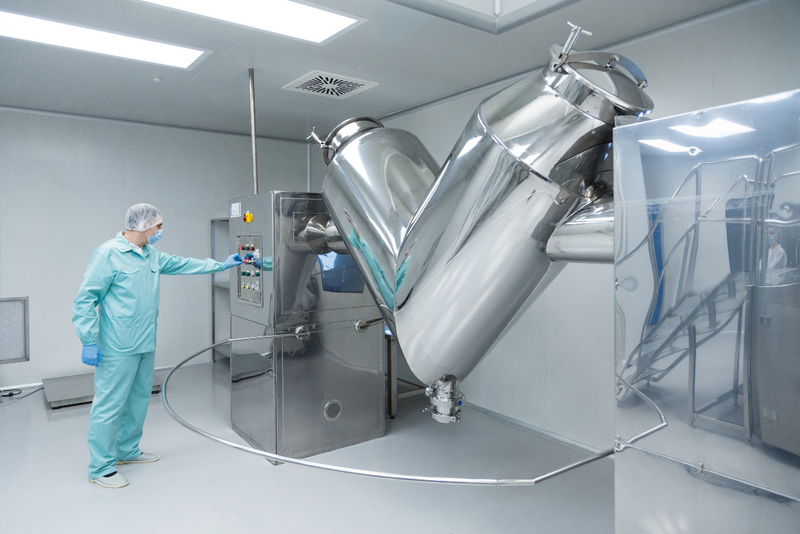
Packaging & Filling of Pharmaceutical Products: Humidity Under Control, Product Safety Ensured
In packaging machinery, humidity and temperature can affect the stability of sensitive medicines. Precise environmental monitoring protects against hygroscopic effects or changes in the product structure.
Typical applications:
- filling systems for liquids or powders
- blister and unit-dose packaging
- packaging under protective atmosphere (e.g. nitrogen)
Critical measurands:
- Temperature & humidity: for stability control
- Dew point: especially for dry gases
- Differential pressure: for cascade control & HEPA filtration
Key sensor requirements:
- long service life without drift for continuous condition monitoring
- easy-to-clean design, resistant to disinfectants and solvents
- high accuracy even under very dry conditions
- combined measurement to reduce installation complexity and supplier count
- GMP and FDA compliance
Environmental Monitoring in Pharma: Applications and Suitable Sensors at a Glance
| Application | E+E Sensor Solution | Relevant Measurands | Key Benefits |
|---|---|---|---|
| Laminar Flow Hoods | EE680 | Air velocity, temperature |
|
| Isolators & RABS | EE610 | Differential pressure, temperature, humidity |
|
| Drying | HTS801 | Temperature, humidity, dew point |
|
| Packaging & Filling | HTP501 | Temperature, humidity, dew point temperature |
|
Why E+E Sensors Stand Out in Pharmaceutical Machinery Engineering
E+E Elektronik sensors offer the ideal combination of technical precision, regulatory confidence and practical integration. They provide audit-friendly documentation for GMP- and ISO-compliant applications. Thanks to modular design, easy field calibration and global support, E+E sensors integrate seamlessly into every phase of the pharmaceutical value chain.
Learn more about robust and highly accurate sensors for pharmaceutical machinery engineering.
Application-Specific Sensor Technology: The Key to Compliance and Process Safety
Environmental monitoring in pharmaceutical machinery is not a standardised process. Every environment—whether cleanroom, isolator, dryer or packaging module—comes with its own requirements for sensor technology, design and integration. One-size-fits-all solutions are not effective here.
The key is application-specific sensor selection. Only when measurands, form factor and calibration strategy are precisely matched to the application can regulatory requirements be reliably met and processes efficiently controlled.
E+E Elektronik offers scalable solutions and targeted support for condition monitoring systems. Let’s find the right sensor for your pharmaceutical machine together.
If you would like to learn more about environmental monitoring in the pharmaceutical industry, the E+E sensor specialists are happy to support you.