
Advantages of Battery Dry Rooms with E+E Sensors
Battery dry rooms must operate reliably over long production periods. If a sensor drifts, the control system may continue to show stable values even though the actual process conditions have changed. This can lead to undetected moisture risks, unstable zone control or unnecessarily large safety margins.
E+E Elektronik focuses on stable measurement throughout the entire service life. For monitoring very low moisture levels, robust capacitive sensing elements and advanced auto-calibration concepts help reduce uncertainty caused by sensor drift and provide a reliable basis for dry room control.
Stable differential pressure and air velocity data are equally important for dry room control. Differential pressure measurement helps maintain defined pressure cascades between production zones and airlocks. Air velocity measurement supports reliable monitoring of air handling and recirculation. Together, these values provide the basis for stable dry room operation.

Battery dry rooms are not static environments. Doors open, airlocks cycle, people and materials introduce moisture, batches change and dehumidification systems respond to varying loads. At these moments, the control system needs current measurement data.
For dew point control, a signal that freezes during auto-calibration can become a genuine process risk. The displayed value may appear stable, but it no longer reflects the current moisture conditions. This can delay the detection of moisture excursions and increase the risk of unnecessary over-drying or insufficient process protection.
Continuous dew point measurement with the TDS501 keeps current process changes visible. Differential pressure measurement shows whether zone separation remains stable, while air velocity measurement helps verify that supply air and recirculation are operating as intended.
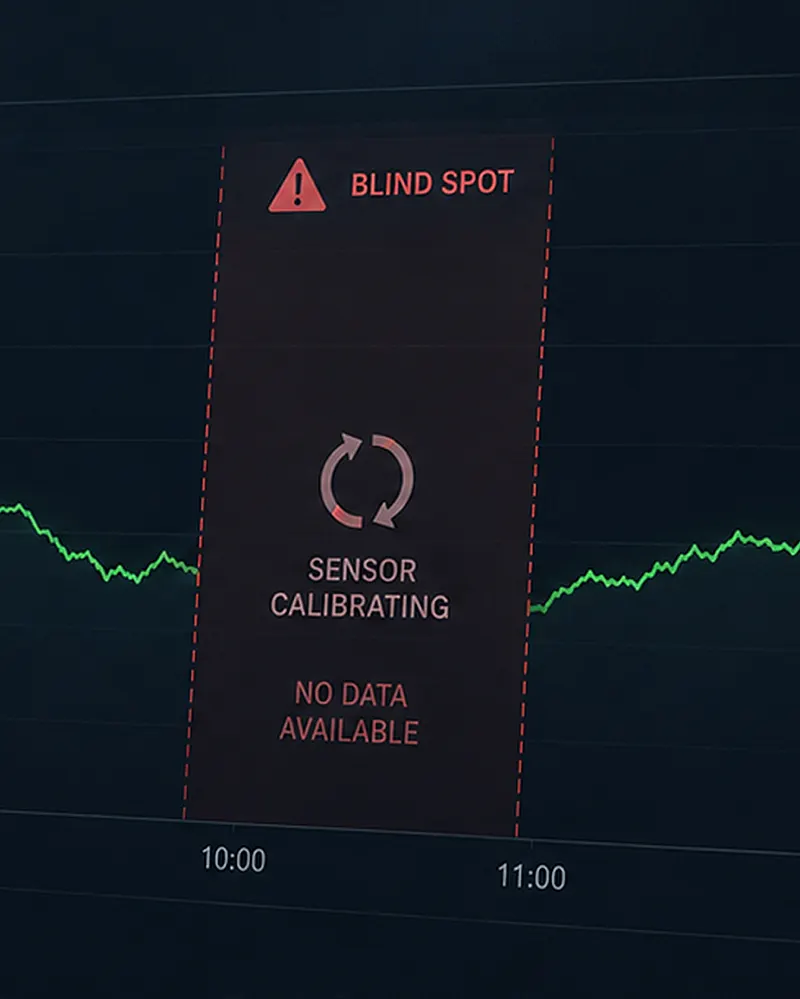
In battery dry rooms, even small changes can quickly become relevant. Moisture introduced through airlocks, leaks or increased personnel activity can disrupt the dehumidification balance. Differential pressure deviations can compromise zone separation, while changes in airflow can affect supply air distribution and recirculation.
Fast measurement feedback allows the control system to respond before a deviation becomes a quality issue or causes unnecessary energy consumption. A fast dew point response supports demand-based dehumidifier control, enabling the system to operate closer to the required moisture window without drying more than necessary. Rapid differential pressure and air velocity feedback helps identify unstable pressure relationships or airflow conditions at an early stage.
E+E sensors are designed for use in control applications. For dew point measurement, filter concepts can be selected to balance sensor protection and response time. In clean and dry environments, an optional open filter cap enables a particularly fast response. Digital interfaces such as Modbus RTU provide measured values for control, monitoring and alarm functions.
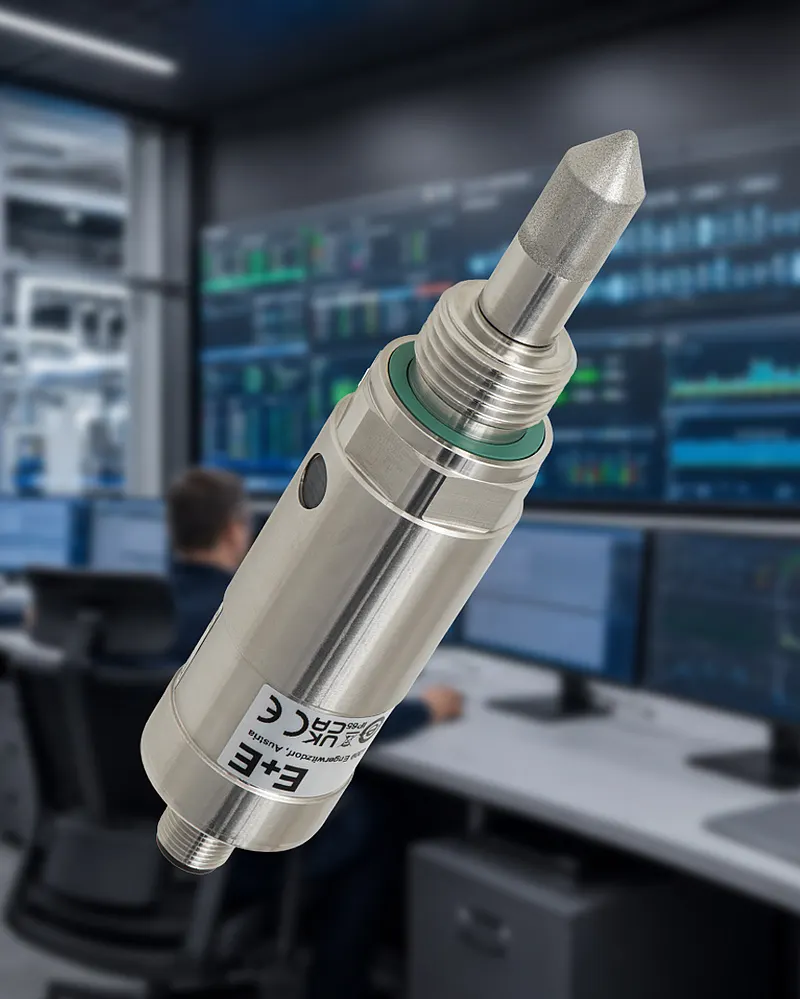
Battery production requires reproducible process conditions. Measurement values are used not only for control, but also for commissioning, validation, quality assurance, service checks and root-cause analysis.
Dew point data demonstrates that the dry room atmosphere remains within the required moisture range. Differential pressure data documents zone separation and compliance with defined pressure cascades. Air velocity data supports the evaluation of air handling performance. Together, these values provide a sound basis for process documentation and quality decisions.
E+E Elektronik combines industrial sensor technology with comprehensive calibration expertise. Traceable dew point calibration and E+E Elektronik’s status as a Designated Institute of the Republic of Austria for humidity and dew point strengthen confidence in the measured values. This provides customers with a reliable basis for documenting dry room performance and long-term process stability.

Products for Battery Dry Rooms
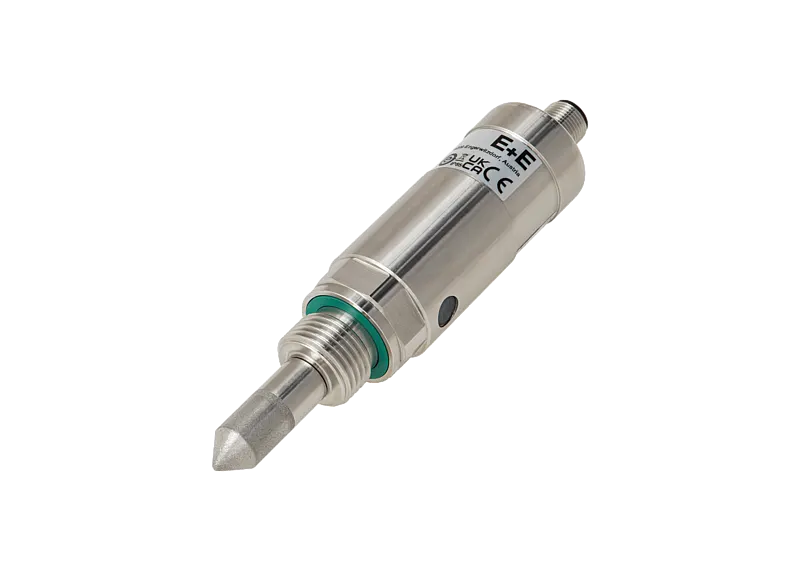
TDS501
Dew Point Sensor down to -70 °C Td (-94 °F Td)
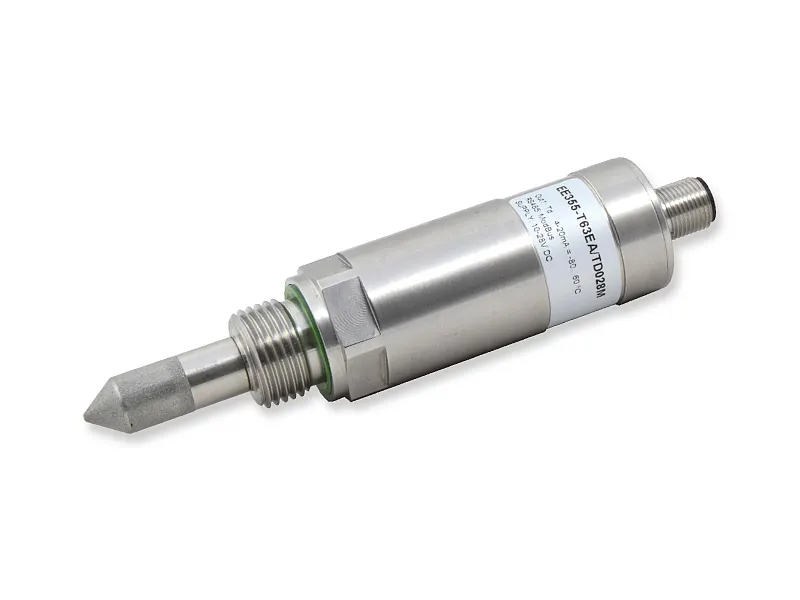
EE355
Dew Point Sensor down to -60 °C Td (-76 °F Td)
- down to −60 °C Td (−76 °F)
- -40 to 70°C (-40 to +158°F)
- up to 80 bar (1,160 psi)
- RS485 (Modbus RTU)
- stainless-steel housing
- IP65 protection
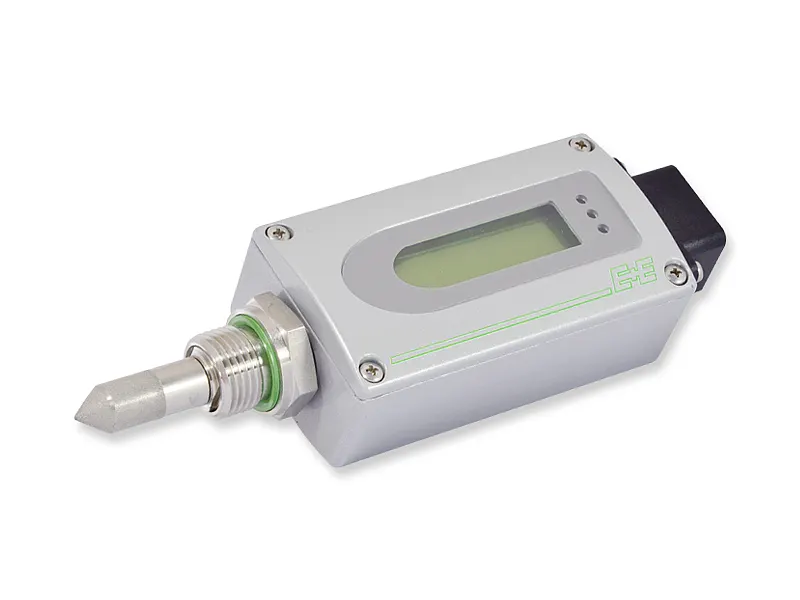
EE371
Compact Dew Point Sensor
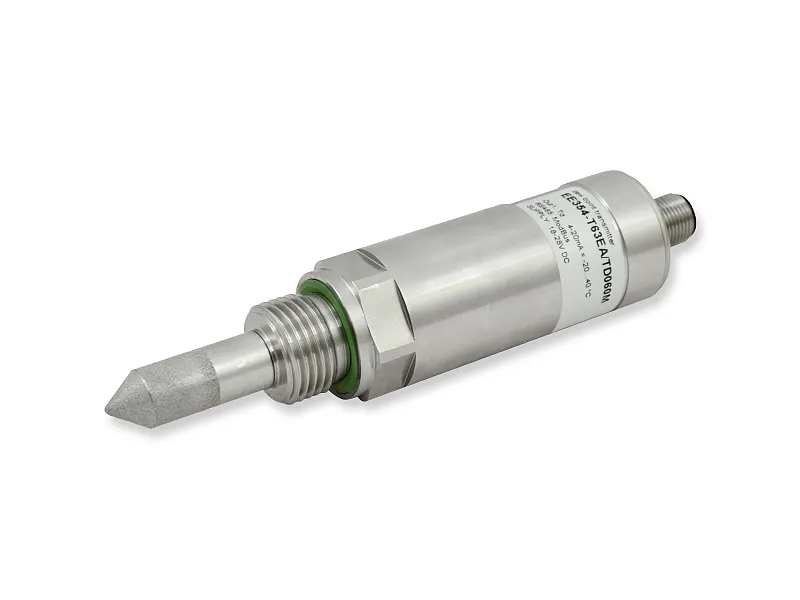
EE354
Dew Point Sensor down to -20 °C Td (-4 °F Td)
- dew point down to –20 °C Td (–4 °F Td)
- –20 to +50 °C Td (–4 to +122 °F Td)
- RS485 (Modbus RTU)
- up to 80 bar (1,160 psi)
- stainless-steel housing
- IP65 / NEMA 4X
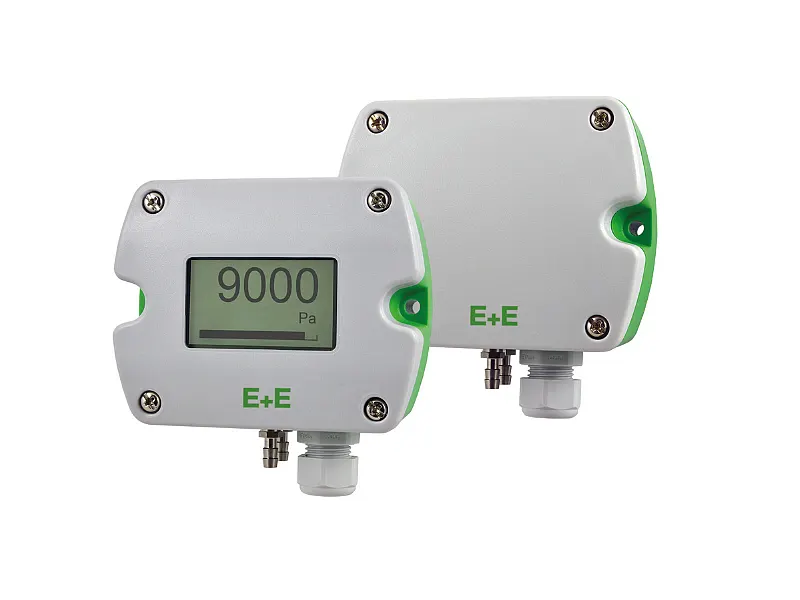
EE610
Low Differential Pressure Sensor
- 0...25 / 50 / 75 / 100 Pa
- –20…60 °C (–4…140 °F)
- Accuracy: ±0.5 Pa = ±0.5 % FS
- Auto-zero function
- Analogue output: 0–10 V or 4–20 mA
- Modbus RTU (RS485)
- IP65 / NEMA 4X housing
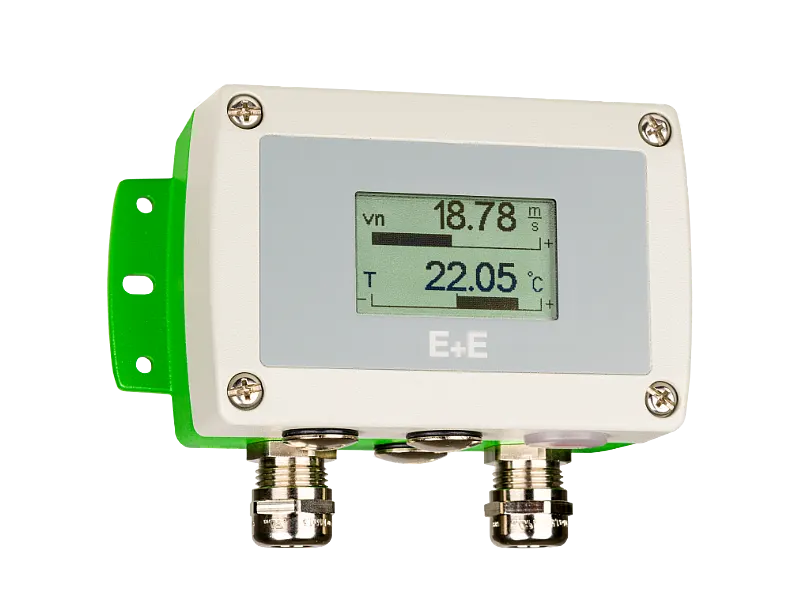
AVS701
Highly Accurate Air and Gas Velocity Sensor for Industrial Applications
- -40 to +140 °C (-40 °F to 284°F)
- 0 to 40 m/s (0 to 8 000ft/min)
- IP65 / NEMA 4X
- for demanding industrial applications
- high-end ceramic sensing element
- stainless steel sensor head and probe
- Modbus RTU
Questions about Battery Dry Rooms?
Tell us about your application – we’ll recommend a suitable sensor or calibration solution tailored to your needs.