Data Centre Cooling: Cooling Types and Requirements for Measurement Technology
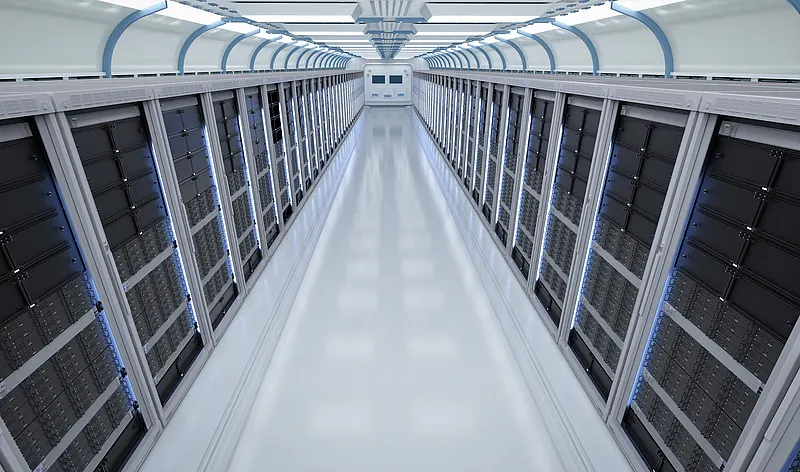
Cooling Systems and Technologies
Data centre cooling is one of the most critical and energy-intensive processes in IT operations. It often accounts for more than 30% of total energy consumption. The choice of the right cooling system has a decisive impact on efficiency and operational reliability. The cooling system deployed, in turn, determines which sensors need to be installed at which measurement points. This article provides an overview of
- the most common types of data centre cooling systems,
- their requirements for measurement technology and
- how E+E sensors support stable, standards-compliant data centre operation.
Cooling: The Biggest Lever for Data Centre Energy Efficiency and Stability
Forecasts by the International Energy Agency (IEA) point to a doubling of global data centre electricity consumption by 2030. In view of this rapidly increasing energy demand, efficient cooling is becoming a decisive factor for the economic and sustainable operation of data centres. The requirements are considerable:
- Incorrectly configured or insufficiently monitored systems not only lead to high operating costs, they also increase the risk of failure. 31% of data centres experience at least one outage per year.
- Increasing the server supply air temperature by just 1 °C can reduce cooling energy demand by up to 9%. However, this enormous savings potential can only be realised safely if the temperature is monitored precisely and comprehensively throughout the entire data centre.
- Key standards and guidelines, above all those issued by ASHRAE (American Society of Heating, Refrigerating and Air-Conditioning Engineers) and the European EN 50600 series of standards, define clear requirements for temperature and humidity.
Anyone who does not monitor cooling systems in data centres wastes energy and risks outages.
Air Cooling: The Established Approach to Data Centre Cooling
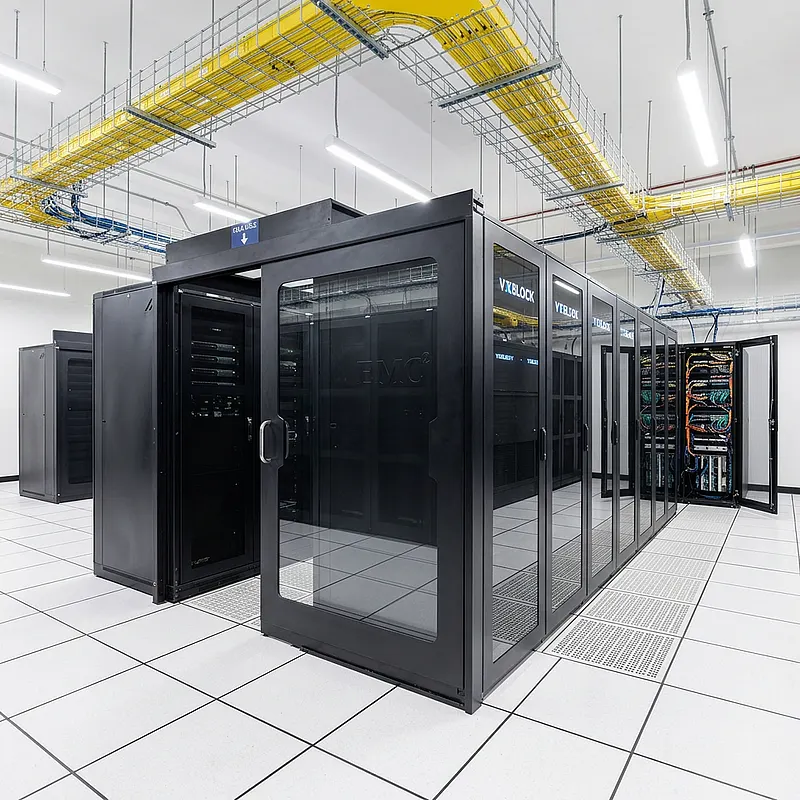
Air cooling remains the standard in most existing data centre facilities. Air-based data centre cooling uses the principle of aisle containment to keep the cooled supply air strictly separated from the warm server exhaust air.
Cold Aisle vs Hot Aisle Containment
There are two variants of aisle containment, each following a different approach:
- Cold Aisle Containment (CAC): Here, the cold aisle from which the servers draw their cool supply air is enclosed and separated from the rest of the data centre. This prevents the cold air from mixing with warm ambient air before it reaches the servers.
- Hot Aisle Containment (HAC): With this method, the hot aisle is enclosed. The hot exhaust air from the servers is collected and returned directly to the cooling system. This keeps the rest of the data centre room cool.
Both methods aim to increase the return air temperature to the cooling system, which improves its efficiency. The choice between CAC and HAC often depends on the structural conditions and the specific layout of the IT infrastructure.
Air Cooling: Requirements for Measurement Technology
The greatest challenge with this approach is avoiding bypass air and leakage, both of which can drastically reduce efficiency. Unnoticed air exchange between the aisles means that cooling systems have to deliver more output than is actually necessary.
For efficient and safe air cooling in the data centre, precise monitoring of the following parameters is crucial:
- Differential pressure: A stable positive pressure of 10 to 20 Pa in the cold aisle ensures that cold air flows only through the server racks.
- Temperature and humidity: Compliance with ASHRAE guidelines (18-27 °C, 20-80% RH) protects IT hardware against failures caused by hot spots, corrosion, and electrostatic discharge.
Liquid Cooling: The Future of Data Centre Cooling
With increasing rack densities, particularly due to AI applications, air cooling is reaching its physical limits. The industry expects it to be gradually supplemented or replaced by liquid cooling over the next 5 to 10 years. In these liquid cooling systems for data centres, heat dissipation is significantly more efficient.
Types of Liquid Cooling
Liquid cooling can be divided into different approaches that vary in complexity and efficiency:
- Direct Liquid Cooling (DLC) / Direct-to-Chip: The coolant is routed through small tubes and so-called cold plates directly to the hottest components, such as CPUs and GPUs. The liquid absorbs the heat and carries it away.
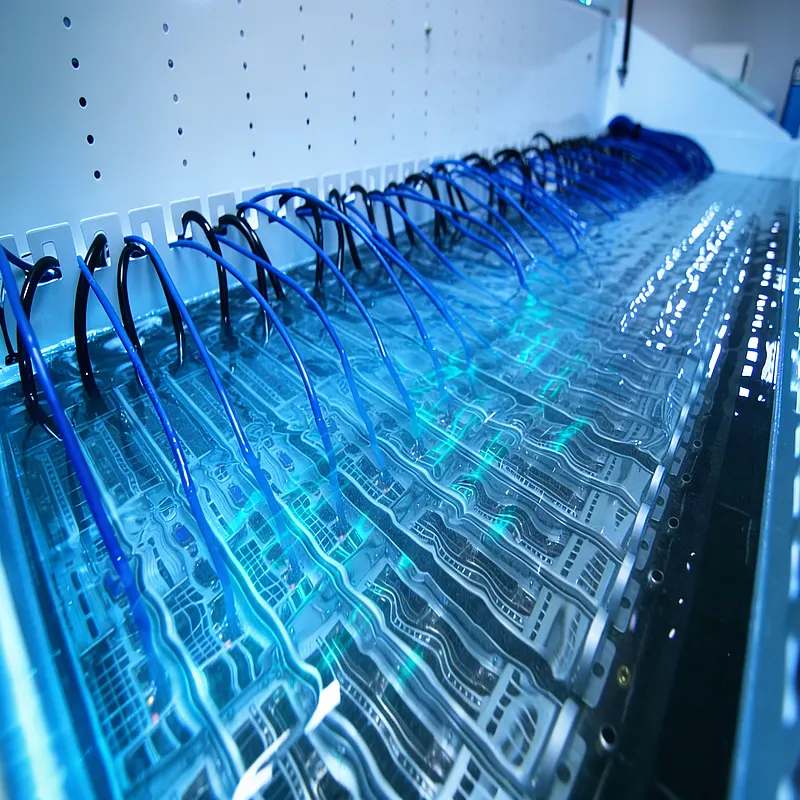
- Immersion cooling: This is the most radical and the most efficient method of data centre cooling. Entire servers or IT components are immersed directly in a non-conductive cooling liquid, maximising heat transfer.
- Two-phase liquid cooling: In this advanced variant, which can be used in both DLC and immersion cooling, the coolant evaporates directly on the hot surface of the component. The phase change from liquid to gas removes an extremely high amount of heat from the hardware.
Liquid Cooling: Requirements for Measurement Technology
Liquid cooling in the data centre brings new measurement challenges:
- Condensation risk: In liquid cooling systems, the dew point in the rack must be monitored precisely to prevent condensation forming on critical components.
- Cooling tower efficiency: For the operation of cooling towers, exact measurement of the wet-bulb temperature is crucial in order to optimally control evaporative cooling.
- Coolant quality: One critical issue is moisture in coolants. Continuous quality monitoring, for example using E+E moisture-in-oil sensors, is essential to safeguard the properties of the medium.
How E+E Sensors Support Efficient and Safe Data Centre Cooling
Every cooling system places different demands on sensor technology. However, what is measured is not the only decisive factor. Sensor placement is just as important. Incorrectly placed or inaccurate sensors can lead to overcooling or overheating of IT equipment. Energy-efficient and fail-safe operation requires precise, long-term stable sensors. Temperature measurement that is just 0.5 °C more accurate can reduce cooling energy consumption by 4-5%.
E+E sensors have been developed for demanding 24/7 operation in data centres and provide:
- high measurement accuracy with direct savings potential (up to ±0.1 °C for temperature)
- sensor coatings for corrosion protection
- high long-term stability without drift thanks to functions such as ARC (Automatic Recovery) and Condensation Guard
- compliance with ASHRAE, DIN EN 50600 / ISO/IEC 22237
- BMS/BAS compatibility (Modbus RTU)
Which Sensors for Which Cooling System?
The following table shows which measurands and sensors are decisive for the most common types of data centre cooling systems:
| Cooling system | Critical measurand | Why it matters | E+E sensor |
| Air Cooling | Temperature at rack inlet/outlet | Hot-spot detection, ASHRAE compliance (18-27 °C) | EE074, HTS401, EE451 |
| Relative humidity | ESD protection, corrosion- and condensation prevention (50-55% RH optimum) | EE072, HTS401 | |
| Differential pressure between cold and hot aisle | Ensure pressure cascades (10–20 Pa), leak detection | EE610 | |
| Air velocity in underfloor plenum / at rack inlet | Fan control, preventing backflow (0–1 m/s), energy optimisation | EE671, EE650, EE660 | |
| Liquid Cooling / DLC | Supply/return temperature of cooling water | Heat exchanger control, efficiency | EE074, EE431, EE471 |
| Dew point in the rack | Condensation protection for GPU racks (>30 kW) | EE072, EE046 Condensation Monitor | |
| Cooling tower | Outdoor air temperature + humidity | Free cooling strategy, PUE < 1.2 possible | EE260, EE451 |
| Immersion cooling | Moisture in coolant | Quality monitoring of the dielectric fluid, leakage detection | EE364 / MOP301 |
Table 1: Potential applications of E+E sensors in data centres
Data Centre Cooling Requires Application-Specific Measurement Technology
Choosing the cooling system is a strategic decision. Air cooling remains the standard for many existing systems. Liquid cooling is becoming increasingly important in high-density data centre applications. What all concepts have in common is that without valid sensor data, no cooling system can be operated safely, efficiently and in compliance with standards. This requires the right measurement technology.
E+E Elektronik is your reliable partner for the precise monitoring of all types of data centre cooling and provides tailored, robust sensor solutions that are easy to integrate.